✨ New Arrivals Just Dropped!Explore
The Big Duck and Eastern Long Island's Duck Farming Industry
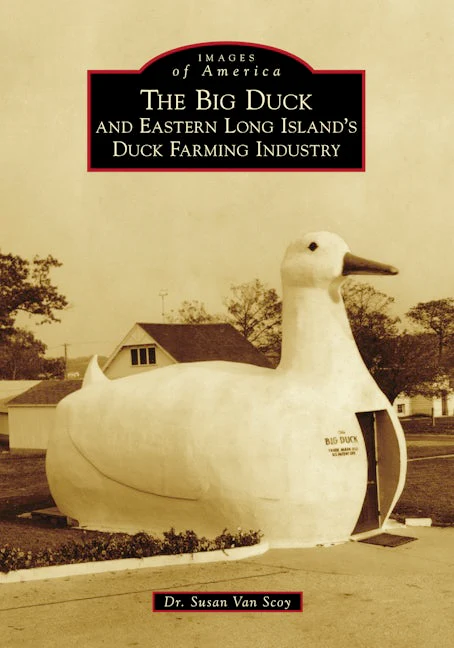
The Big Duck and Eastern Long Island's Duck Farming Industry traces the fascinating and largely unknown history of the Long Island Duck—a fixture on the menus of fine dining establishments around the world. The first duck farm, Atlantic Duck Farm, opened on Long Island in Speonk in 1858; however, raising ducks did not take hold until the Pekin duck breed arrived from China in 1873. Due to Long Island's waterfront properties, temperate climate, and sandy soil, along with modernization of the farming industry, duck production grew rapidly, increasing from approximately 200,000 ducks per year in 1897 to two million ducks in 1922. By 1940, nearly 100 duck farms were concentrated mainly between Eastport and Riverhead. Today, due to environmental regulations and soaring costs, only one Long Island duck farm survives—Corwin's Crescent Duck Farm in Aquebogue. However, many influences of the Long Island duck industry remain, such as the Big Duck, a duck-shaped building conceived by Martin Maurer in 1931 that was used to sell poultry and duck eggs, inspiring the famous term duck architecture.
Product Information
Product Information
Shipping & Returns
Shipping & Returns
The Big Duck and Eastern Long Island's Duck Farming Industry
The Big Duck and Eastern Long Island's Duck Farming Industry
The Big Duck and Eastern Long Island's Duck Farming Industry traces the fascinating and largely unknown history of the Long Island Duck—a fixture on the menus of fine dining establishments around the world. The first duck farm, Atlantic Duck Farm, opened on Long Island in Speonk in 1858; however, raising ducks did not take hold until the Pekin duck breed arrived from China in 1873. Due to Long Island's waterfront properties, temperate climate, and sandy soil, along with modernization of the farming industry, duck production grew rapidly, increasing from approximately 200,000 ducks per year in 1897 to two million ducks in 1922. By 1940, nearly 100 duck farms were concentrated mainly between Eastport and Riverhead. Today, due to environmental regulations and soaring costs, only one Long Island duck farm survives—Corwin's Crescent Duck Farm in Aquebogue. However, many influences of the Long Island duck industry remain, such as the Big Duck, a duck-shaped building conceived by Martin Maurer in 1931 that was used to sell poultry and duck eggs, inspiring the famous term duck architecture.
$24.99
The Big Duck and Eastern Long Island's Duck Farming Industry—
$24.99
Product Information
Product Information
Shipping & Returns
Shipping & Returns
Description
The Big Duck and Eastern Long Island's Duck Farming Industry traces the fascinating and largely unknown history of the Long Island Duck—a fixture on the menus of fine dining establishments around the world. The first duck farm, Atlantic Duck Farm, opened on Long Island in Speonk in 1858; however, raising ducks did not take hold until the Pekin duck breed arrived from China in 1873. Due to Long Island's waterfront properties, temperate climate, and sandy soil, along with modernization of the farming industry, duck production grew rapidly, increasing from approximately 200,000 ducks per year in 1897 to two million ducks in 1922. By 1940, nearly 100 duck farms were concentrated mainly between Eastport and Riverhead. Today, due to environmental regulations and soaring costs, only one Long Island duck farm survives—Corwin's Crescent Duck Farm in Aquebogue. However, many influences of the Long Island duck industry remain, such as the Big Duck, a duck-shaped building conceived by Martin Maurer in 1931 that was used to sell poultry and duck eggs, inspiring the famous term duck architecture.